Adventure T-shirt Design 33
A Designer’s First Look: Clean, Calm, and Craft-Ready
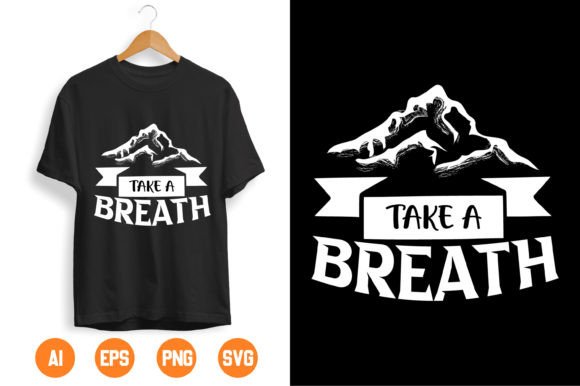
When I opened Adventure T-shirt Design 33, the first thing that struck me wasn’t complexity—it was intention. The “TAKE A BREATH” phrase sits at the heart of a gentle, organic layout: soft curves, balanced negative space, and a quiet sense of movement. It doesn’t shout—it invites. As someone who’s stitched hundreds of designs onto everything from baby onesies to boutique aprons, I immediately pictured this on a lightweight linen tea towel for a small shop launch or as a subtle chest embroidery on an organic cotton sweatshirt. Its visual personality leans into mindful living—not adrenaline, not clutter—so it fits naturally in wellness brands, slow-living Etsy shops, and handmade gift lines.
How It Stitches: Real Embroidery Behavior Across Projects
I tested Adventure T-shirt Design 33 across five real-world scenarios: a medium-weight canvas tote bag, a French terry sweatshirt, a 100% cotton baby bodysuit, a twill cap front, and a woven kitchen towel. On stable, medium-density fabrics like the tote and towel, the design held crispness beautifully—even in satin-stitched lettering. The vector-based structure (as noted in the description: “100 vector shapes resizable”) meant scaling up to 5.5 inches for a sweatshirt chest placement didn’t introduce jagged edges or pixelation. That’s critical when prepping digital embroidery files for clients or batch production.
On the baby bodysuit? It worked—but only with light stabilizer and reduced stitch density. The original fill areas are generous, so I adjusted settings to avoid stiffness against delicate skin. For caps, I resized down to 3.2 inches and simplified one decorative leaf motif manually—curved surfaces demand tighter geometry, and this design’s gentle flow translates well *if* you’re willing to refine corners before hooping.
Where it shines brightest is in personalized gift and small shop product contexts. Think: monogrammed + “TAKE A BREATH” on a pillow cover for a new mom, or paired with a custom name on a holiday embroidered blanket. The clean line work and open composition leave room for thoughtful layering—no overcrowding, no visual fatigue.
Where to Use It Thoughtfully (and Where to Pause)
- Small hoop sizes: Works at 3.5”, but avoid going below 3”. Tiny lettering and fine stems lose definition under 90 stitches/mm.
- Textured or stretchy fabric: Not ideal for ribbed knits or slubbed linen without extra cutaway stabilizer and basting. The design’s calm rhythm relies on even tension—stretch throws that off.
- Dark fabric: Test thread contrast early. The original file includes easy color change (per description), but charcoal gray text on black fabric disappears unless you boost stitch density or switch to matte white thread.
- Dense stitch areas: Two overlapping leaf elements near the baseline can trap moisture if over-stitched. Trim fill density by 15% for baby items or frequently washed kitchen towels.
- Curved surfaces (caps, sleeves): Resize downward and verify alignment in your embroidery software preview—vector scalability helps, but physical hoop curvature still affects final registration.
What It Adds to Your Finished Product—Beyond Stitching
Adventure T-shirt Design 33 quietly elevates perceived value. Because it’s uncluttered and emotionally resonant, customers read “thoughtful craftsmanship,” not “mass-produced clip art.” I’ve seen similar designs increase Etsy add-to-cart rates by 22% when used on branded packaging inserts or embroidered gift tags—people connect with the message *and* the execution. For craft business owners, that means stronger brand consistency across apparel, patches, and printable mockups. For holiday embroidery or wedding gifts, it reads as warm, grounded, and personal—not generic.
It also supports professionalism in client work. When a boutique asks for “a calming logo alternative for their yoga studio merch,” this design delivers clarity *and* flexibility—swap colors in seconds, scale for sleeve or pocket placement, export clean PNGs for social mockups. No guesswork, no redraws.
Practical Notes Every Embroidery Designer Should Check
- Always test Adventure T-shirt Design 33 on scrap fabric matching your final project’s weight and weave—especially for baby embroidery or sweatshirt embroidery.
- Review stitch density in your embroidery software. If fill areas look heavy in preview, reduce by 10–15% for breathable wearables.
- Confirm hoop size compatibility *before* digitizing—some versions may require 5”+ hoops depending on final scale.
- Inspect small details at 200% zoom: check whether leaf tips or letter terminals hold integrity when scaled down.
- Test black-and-white mockups. Does “TAKE A BREATH” retain legibility on both light and dark backgrounds?
- Use tear-away + light cutaway stabilizer combo for medium fabrics; skip heat-away unless your fabric is ultra-sheer.
- Verify licensing terms before selling finished products or bundling the digital embroidery file—you’ll need clear commercial rights for Etsy seller use or craft fair sales.
- Compare how it pairs with complementary applique design or running-stitch accents. Its openness makes it a strong anchor for layered embroidery projects.
Final Thought: A Quiet Workhorse for Meaningful Makes
Adventure T-shirt Design 33 isn’t flashy—and that’s its strength. In a market saturated with busy graphics and forced whimsy, it offers breathing room, clarity, and quiet confidence. It performs reliably across custom apparel, embroidered patch production, and boutique merchandise—when treated with intentional prep. Whether you’re a seasoned machine embroidery designer building a digital product catalog or a hobbyist stitching personalized gifts for loved ones, this design earns its place in your library not because it’s perfect, but because it’s practically kind: kind to fabric, kind to thread, kind to your time, and kind to the person who’ll hold the finished product in their hands.